A
Anonymous
Financial expert · Financer

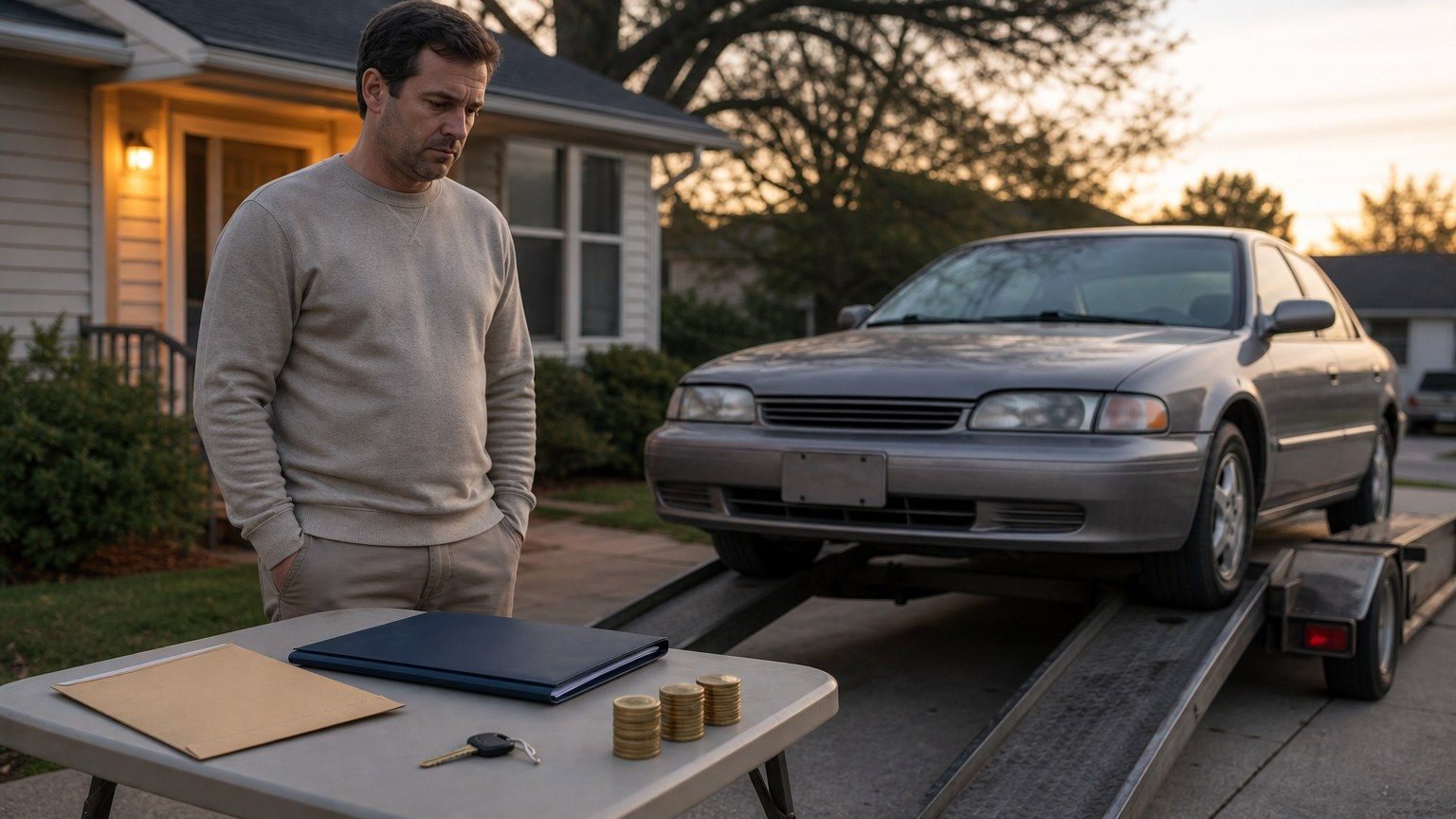
Title loans are short-term loans secured by your vehicle title. You keep driving the car, but the lender can repossess it if you do not repay. The warning matters: the CFPB found that single-payment vehicle title loans often carry APRs around 300%, more than 80% are reborrowed the same day a previous loan is repaid, and about 1 in 5 loan sequences ends with the borrower losing the vehicle.
Last verified: June 2026.
That does not mean every person who searches for car title loans is reckless. Most are trying to solve a real cash emergency. But when the loan is tied to the car you use for work, school, groceries, and doctor visits, the risk is not just a line item in a budget. It can turn one overdue bill into a transportation crisis.
This guide explains how title loans work, what they usually cost, what title loan requirements look like, how state laws affect availability, and what we would check before putting a car title on the line.
A car title loan is a secured loan that uses your vehicle title as collateral. In plain English, you borrow money against the value of your car, truck, motorcycle, or other vehicle. The lender keeps a lien on the title until the loan is paid back.
Most title loans are small, short-term, and expensive. The FTC says they commonly run 15 or 30 days and are often for 25% to 50% of the vehicle's value. If your car is worth $6,000, that could mean a loan of about $1,500 to $3,000, depending on the lender and state rules.
The part people sometimes miss is control. You may keep driving the car during the loan, but the title is not really yours to use freely until the debt is cleared. If you miss the payment, the lender may be able to repossess and sell the vehicle. Some lenders also require spare keys, GPS tracking, or starter-interrupt devices, which makes collection easier if the loan goes bad.
Here is the usual flow. You bring the vehicle, a clear or mostly clear title, photo ID, and proof of insurance to a storefront lender or start with an online title loans application. The lender looks at the vehicle and title, estimates how much it is willing to lend, and gives you cash or a deposit.
The loan is usually due fast. Many single-payment title loans require the full amount plus fees in about 30 days. That is different from a normal installment loan, where you make smaller payments over several months or years.
In many cases, approval is based more on the vehicle than on your credit profile. That is why title lenders market to borrowers with bad credit or urgent cash needs. It is also why the loan can be dangerous. The lender has collateral it can take if you cannot pay.
So, how do title loans work in one sentence? You get fast cash by pledging your vehicle title, but the lender can take the car if the debt is not repaid under the contract.
The cost is the main reason we are careful with this topic. A fee that sounds small for one month becomes enormous when converted to APR.
The FTC gives a simple example: a $1,000 title loan with a 25% monthly finance fee costs $250 for 30 days. You repay $1,250, plus any other fees. Annualized, that is about 300% APR.
That APR number is not just a technical disclosure. It tells you what the loan costs compared with other credit. A payday loan APR can also sit in triple digits, but an auto title loan adds the possibility of losing your car.
| Example | Amount |
|---|---|
Amount borrowed | $1,000 |
Monthly finance charge | 25% |
Fee after 30 days | $250 |
Amount due after 30 days | $1,250, before extra fees |
Approximate APR | About 300% |
The first loan is often not where the damage ends. The problem starts when the 30-day due date arrives and the borrower still does not have the full payoff amount.
Some lenders let you roll over the loan. That can feel like relief, because it buys another month. In reality, it adds another round of fees and keeps the car title tied up. Using the $1,000 example above, a second 25% monthly fee adds another $250. Now the cost of borrowing $1,000 for 60 days is at least $500, before other charges.
This is why the CFPB's title-loan data is so concerning. In its single-payment vehicle title lending report, over 80% of loans were reborrowed on the same day a previous loan was repaid, and only about 1 in 8 loan sequences ended after a single loan that was repaid without reborrowing.
If the only way to repay a title loan is to take another one, the loan is not solving the emergency. It is moving the emergency to next month and charging you for the delay.
Find the best personal loan in minutes through our comparison. 100% free and easy to use.
Start comparing personal loans now!A title loan is secured by your vehicle, so repossession is the risk that separates it from many other high-cost loans. If you cannot pay, the lender may be able to take the car and sell it.
The CFPB found that about one-third of single-payment vehicle title loan sequences experienced a default, and about 1 in 5 resulted in repossession. That is the part I would sit with before signing anything.
Losing a vehicle can make every other financial problem worse. If you need the car to get to work, you may lose income. If public transportation is poor where you live, a repossession can affect child care, medical appointments, groceries, and school.
State law affects what happens after the sale. In some states, the lender may have to return surplus money after the car is sold and the debt is paid. In others, the rules may be less favorable. Ask for the repossession and surplus rules in writing before you sign.
There is no single national rule that makes title loans legal or illegal everywhere. State law does most of the work. Some states permit title lending with licensing rules, fees, and rate limits. Some states cap rates so tightly that high-cost title lending does not work as a business model. Others prohibit or restrict it.
This also changes. Kentucky repealed the statute that allowed high-cost auto title loans in 2024, according to the National Consumer Law Center's 2025 state lending report. The Center for Responsible Lending reported in February 2025 that high-cost vehicle-title lending was prohibited in 33 states and Washington, D.C., but that prohibited lending was still showing up in some places through workarounds.
So, if you searched for title loans near me and found a lender, do not assume the offer is legal just because the website looks professional. Check your state attorney general, state banking department, or state consumer finance regulator. Then compare the contract's APR, fees, term, renewal rights, and repossession language with your state's rules.
Online title loans can look easier because the first steps happen from your phone. You may upload photos, title information, insurance documents, and identification before speaking with a lender. In some cases, the lender still needs a vehicle inspection, a title transfer step, or an in-person signing.
Do not let the online process make the loan feel safer than it is. The same basic risk remains: the vehicle secures the debt.
Before you move forward online, verify the lender's legal name, state license, physical address, APR disclosure, fee schedule, renewal policy, and complaint history. Be extra careful if the site pushes urgency, avoids APR language, asks for upfront fees before approval, or will not show the full contract until after you provide sensitive information.
Title loans, payday loans, and bad-credit loans all show up when people need cash quickly. They are not the same product.
A payday loan is usually unsecured and repaid from your next paycheck or bank account. It can be expensive, but your car title is not the collateral.
A title loan is secured by your vehicle. That can make approval easier if you own the car, but it also gives the lender a path to repossession.
A bad-credit personal loan is usually an installment loan. It may still be expensive, especially if your FICO score is low, but it typically spreads repayment over time and may not require your car title. The tradeoff is underwriting. You may need income verification, a credit check, and a debt-to-income ratio the lender can accept.
If all three are available, we would usually compare the personal loan or credit-union option first. Paying a higher APR is bad. Paying a higher APR and risking your transportation is worse.
If you are still considering a title loan after comparing alternatives, slow the process down. A lender that will not give you time to read the contract is giving you useful information about how it treats borrowers.
Check these items before you sign:
If the numbers do not work on paper, they will not work better after the money is spent.
If you already have a title loan and cannot repay it, act before the due date. Waiting usually gives you fewer options.
Start by asking the lender for a written payoff amount, a payment history, and the exact repossession timeline. Then check your state law. Some states limit rollovers, require notices, restrict repossession practices, or require the lender to return surplus money after a vehicle sale.
Next, look for a cheaper exit. That might mean refinancing with a credit union, applying for a lower-cost installment loan, using payday loan consolidation if multiple high-cost debts are stacked together, or working with a nonprofit credit counselor.
If you are a covered military borrower, contact a military legal assistance office or the CFPB. The MLA can be especially important when a lender uses a vehicle title to secure a loan or charges above the 36% MAPR cap.
The goal is not to find a perfect option. It is to replace a debt that can take your car with one that gives you more time, more legal protection, and a realistic payment.
Many car title loans are based on the vehicle's value, often around 25% to 50% according to FTC consumer guidance. The exact amount depends on the lender, state law, vehicle condition, and whether the title is clear.
A common title loan example is a 25% monthly finance charge, which works out to about 300% APR. Extra fees and add-on products can make the total cost even higher.
Yes. If you do not repay under the contract, the lender may be able to repossess and sell the vehicle. The CFPB found that about 1 in 5 single-payment vehicle title loan sequences resulted in repossession.
No. Title-loan legality is state-specific. Some states permit title loans, some restrict them through rate caps or licensing rules, and others prohibit high-cost vehicle-title lending. Check your state attorney general or consumer finance regulator before signing.
Not automatically. Online title loans can be easier to start, but the vehicle still secures the debt. Verify the lender's license, APR disclosure, fees, renewal rules, and repossession terms before giving sensitive information.
Start with credit-union Payday Alternative Loans, personal loans, hardship plans with the biller, local assistance programs, employer advances, and nonprofit credit counseling. The best alternative is usually the one that solves the cash problem without risking your car.
Do you have a question about this topic? Ask the community.
Email confirmed — your comment appears after review.
That link expired. Post your comment again.
Anonymous
Financial expert · Financer
Compare top lenders
from 1% APR
48 options
11 min readLoans
10 min readLoans
12 min readLoans
3 min readLoans
11 min readLoans
Join *Financer Stacks* - Your weekly guide to mastering money basics, stacking extra income, and creating a life where money works for you.