A
Anonymous
Financial expert · Financer

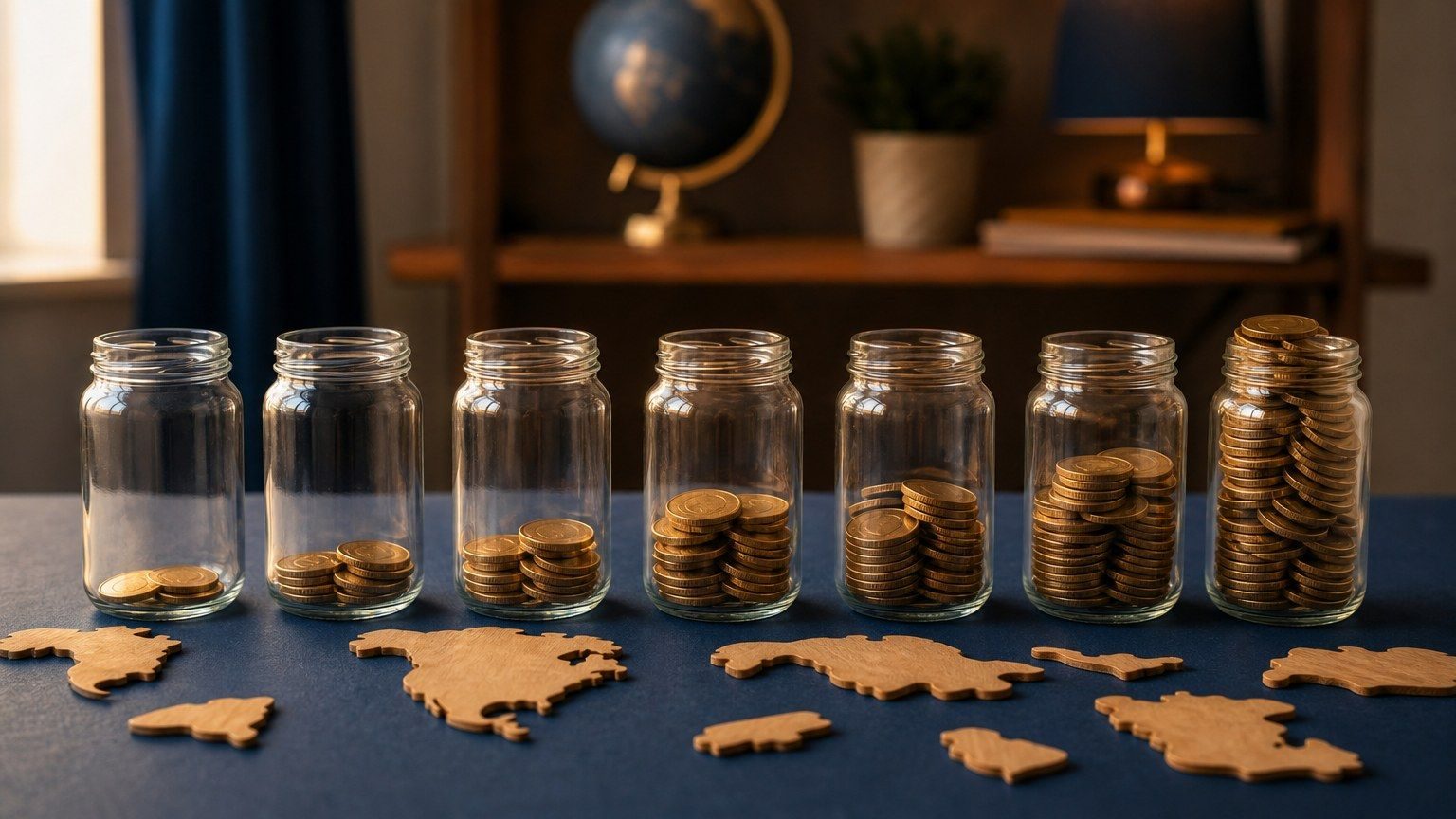
Europe, despite being considered a prosperous continent, conceals dramatic economic disparities between its nations.
In 2026, the GDP per capita differences between Europe's wealthiest and poorest countries are staggering—from over $100,000 in Luxembourg to just $6,380 in Ukraine, which holds the unfortunate title of Europe's poorest country. This position is largely due to the devastating war that has raged on Ukrainian territory for four years.
For Americans, understanding European poverty matters for several critical reasons: geopolitical stability, U.S. foreign aid investment, humanitarian context, and business opportunities. Economic desperation in these regions fuels migration crises, political extremism, and instability that affects American strategic interests.
This detailed analysis examines the 11 poorest countries in Europe, including both EU member states and nations outside the bloc. The data presented is based on GDP per capita in U.S. dollars and reflects complex structural challenges: communist legacy, armed conflicts, systemic corruption, and political instability.
Let's explore the economic reality of these nations and the factors keeping them at the bottom of the European rankings.
Before diving into the rankings, it's essential to understand why Americans should pay attention to European poverty:
Geopolitical Stability: Economic desperation creates fertile ground for political extremism, authoritarian regimes, and regional conflicts that directly affect U.S. foreign policy interests.
U.S. Foreign Aid Investment: American taxpayers fund significant development assistance to Eastern Europe. Since 2022, the U.S. has provided over $66.9 billion in military aid to Ukraine alone, plus substantial economic support to the region.
Migration and Refugee Context: Understanding these economic disparities helps explain migration patterns affecting both Europe and, increasingly, the United States.
Business and Investment Opportunities: U.S. companies are expanding manufacturing and IT operations in Eastern Europe, attracted by lower labor costs and growing markets.
Global Food Security: Several countries on this list, particularly Ukraine, play critical roles in global grain exports that affect food prices Americans pay.
The economic gap between these nations and the U.S. is massive. Even the wealthiest country on this list has a GDP per capita roughly one-quarter that of the United States.
GDP per capita measures the total economic output of a country divided by its population. It's expressed in U.S. dollars to allow international comparison.
Why GDP per capita matters: It provides a snapshot of average economic prosperity, though it doesn't capture income inequality or quality of life factors.
EU vs. Non-EU countries: Several countries on this list are working toward European Union membership, which brings access to development funds, the common market, and requires democratic and economic reforms. EU candidate status means the country is in a lengthy application process similar to joining an exclusive economic club.
The communist legacy factor: Most countries on this list were part of the Soviet bloc or Yugoslavia. The transition from centrally planned economies to market systems has been difficult, leaving lasting effects on institutions, infrastructure, and economic culture.
How these compare to the U.S.: To give you perspective, the United States has a GDP per capita of approximately $85,000. Even Romania, the wealthiest nation on this list, has an economy roughly 28% the size per person. Ukraine's economy is just 7.5% of U.S. levels.
Romania ranks as the 11th poorest country in Europe with a GDP per capita of $23,768 (approximately 28% of U.S. levels), demonstrating that economic progress is achievable in Eastern Europe. Since joining the EU in 2007, the country has made important strides: individual consumption increased from 56% of the EU average in 2014 to 88% in 2024, and the economy has diversified significantly.
However, challenges persist: significant corruption issues, major regional disparities between Bucharest and poorer regions, and mass emigration—over 4 million Romanians have emigrated since 1989. The poverty rate of 23.8% remains among the highest in the EU. Infrastructure investments through European funds and the growing IT sector offer hope for convergence with Western Europe.
Romania's progress shows that EU integration can catalyze development, but requires deep institutional reforms and massive investment in human capital and infrastructure.
Switch to a bank account that works as hard as you do with better benefits and lower costs.
Compare bank accounts hereSerbia, with a GDP per capita of $15,320 (approximately 18% of U.S. levels), is working toward EU membership as a candidate country.
The economy is supported by industrial production (automotive and wiring, electronics), agriculture, and services, with consistent foreign investment, especially from the EU, which has modernized factories and created jobs. IT hubs in Belgrade and Novi Sad are growing rapidly, and its position on the Pan-European Corridor X strengthens the country's role as a logistics hub in the Balkans.
Challenges remain significant: dependence on lignite for energy and the need to modernize state-owned companies, youth emigration, and regional tensions that weigh on the investment climate. Serbia is an EU candidate country gradually adopting European standards, which could accelerate income convergence if reforms continue.
Did you know…
Serbia is among the world's largest raspberry exporters, and Novi Sad hosts EXIT, one of Southeast Europe's most important music festivals.
Albania, with a GDP per capita of $11,110 (approximately 13% of U.S. levels), has traveled a long road from extreme communist isolation to a modern market economy.
The country has significant natural resources (oil, natural gas, minerals) and a rapidly expanding tourism sector attracting millions of visitors to the Adriatic and Ionian coasts. Agriculture remains important, but productivity is still low. Mass emigration (over 1.7 million Albanians live abroad) has reduced pressure on the labor market but created a skilled labor shortage.
Albania has EU candidate status and is implementing reforms to combat corruption and modernize institutions. Infrastructure investments, especially in renewable energy, offer promising prospects.
North Macedonia, with a GDP per capita of $10,380 (approximately 12% of U.S. levels), has made significant progress in the European integration process after resolving the naming dispute with Greece.
The economy is based on the textile industry, agriculture, and services, benefiting from foreign investment in special economic zones. NATO accession in 2020 and obtaining EU candidate status have consolidated development prospects.
However, unemployment remains high (over 15%), especially among youth, and the economy needs diversification to reduce dependence on traditional sectors. Institutional reforms and combating corruption are priorities for European integration. Infrastructure and education investments are beginning to show positive results.
Georgia, with a GDP per capita of $10,130 (approximately 12% of U.S. levels), is strategically positioned as a gateway between Europe and Asia. The country has implemented successful economic reforms in recent years, dramatically improving the business climate and fighting corruption.
The Georgian economy is based on agriculture (especially wines and nuts), rapidly growing tourism, and services. European aspirations are clear—Georgia has EU candidate status and is implementing the association agreement. However, frozen conflicts in Abkhazia and South Ossetia, supported by Russia, create instability and limit development.
The tourism sector has become an important growth engine, attracting millions of visitors annually through liberal visa policies and infrastructure investments.
Did you know…
Georgia is considered the birthplace of wine, with a winemaking tradition spanning over 8,000 years—the first region in the world where wine was produced in clay vessels called "qvevri."
Bosnia and Herzegovina, with a GDP per capita of $9,650 (approximately 11% of U.S. levels), still grapples with the consequences of the devastating war of the 1990s. The complex political structure, with three presidents and multiple levels of government, hinders the adoption of necessary economic reforms.
The economy is based on heavy industry inherited from the Yugoslav period, agriculture, and services, but productivity remains low. High unemployment (over 15%) and systemic corruption fuel mass emigration, especially of educated youth. Dependence on international aid and foreign investment remains high. However, the country is making slow progress in the EU accession process, gradually implementing reforms required by Brussels.
Belarus, with a GDP per capita of $9,440 (approximately 11% of U.S. levels), remains trapped in a state-controlled economy under the authoritarian leadership of Aleksandr Lukashenko. The Belarusian economy depends heavily on Russia for energy and markets, and the lack of market reforms has stalled modernization.
Massive protests in 2020 and government repression led to severe international sanctions that have seriously affected the economy. Main sectors include refining Russian oil, the chemical industry, and agriculture, but productivity remains low due to inefficient state management. Brain drain has accelerated dramatically after 2020, with thousands of IT specialists and other skilled professionals emigrating to neighboring countries.
Did you know…
Belarus is often called "Europe's last dictatorship," with Lukashenko in power since 1994—longer than any other European leader currently in office.
Armenia, with a GDP per capita of $8,970 (approximately 10.5% of U.S. levels), navigates complex geopolitical challenges in the Caucasus region.
The Armenian economy is based on mining (copper, molybdenum), agriculture, and a rapidly expanding IT industry that has become an important growth engine. The Nagorno-Karabakh conflict and tense relations with Turkey and Azerbaijan have limited the country's trade options. The Armenian diaspora, one of the most influential in the world, contributes significantly through remittances and investments.
Armenia has implemented important economic reforms, improving the business climate and diversifying the economy. The technology sector is attracting more investors, and the country aspires to become a regional hub for innovation and IT services.
Moldova, with a GDP per capita of $8,240 (approximately 9.7% of U.S. levels), finds itself in a delicate geopolitical position between Russian influence and European aspirations.
The Moldovan economy depends heavily on agriculture, especially viticulture (Moldovan wine was highly appreciated in the USSR), and remittances from the diaspora representing 16% of GDP. The frozen conflict in Transnistria, chronic political instability, and systemic corruption have hampered economic development for decades. However, Moldova has made remarkable progress in reducing extreme poverty—from 30.2% in 2006 to 9.6% in 2015.
Recently, the country obtained EU candidate status and is implementing ambitious reforms, although the war in neighboring Ukraine creates new economic and energy challenges.
Did you know…
Moldova hosts the world's largest wine cellars—the Mileștii Mici complex has over 125 miles of underground tunnels and is listed in the Guinness Book of Records.
Kosovo, with a GDP per capita of $8,030 (approximately 9.4% of U.S. levels), is one of Europe's youngest countries, declaring independence in 2008, and one of its poorest.
Kosovo's 2008 independence remains controversial; it's recognized by the United States and most EU members but not by Serbia, Russia, China, and five EU countries. The Kosovar economy is based primarily on agriculture, mining (especially lignite and zinc), and, crucially, massive remittances from the diaspora—representing approximately 15% of GDP.
Challenges are multiple: limited international recognition (it's not a UN member), underdeveloped infrastructure inherited from the Yugoslav period, and a dramatic unemployment rate exceeding 25%, reaching 50% among youth. However, Kosovo is making progress in economic reforms and aspires to European integration, gradually implementing EU standards. The services sector and IT technology are beginning to develop, offering hope for the future.
Ukraine holds the unfortunate position as Europe's poorest country in 2026, with a GDP per capita of just $6,380 (approximately 7.5% of U.S. levels). The Russian invasion in February 2022 has completely devastated the Ukrainian economy, reducing current GDP to just 74% of 2021 levels.
The destruction of critical infrastructure, displacement of over 6 million Ukrainians (comparable to the entire population of Massachusetts), and severe economic contraction have transformed the country into an economic war zone. Before the conflict, Ukraine's economy was based on agriculture (it was the world's fifth-largest wheat exporter), heavy industry, and IT technology. Now, reconstruction requires investments estimated at over $400 billion—roughly equivalent to Austria's entire GDP.
The U.S. role in the conflict: The United States has provided $66.9 billion in military assistance to Ukraine since 2022, representing a major strategic investment in countering Russian expansion in Europe. This support reflects American foreign policy interests in maintaining European stability and supporting democratic nations against authoritarian aggression.
Regional spillover effects: The war has affected not just Ukraine but the entire region, disrupting global grain supply chains (affecting food prices worldwide), creating an energy crisis in Europe that impacts U.S. allies, and generating a humanitarian crisis unprecedented in post-war Europe.
The war now entering its fourth year (2022-2026) has created economic devastation that will take decades to repair, even with substantial international assistance.
Did you know…
Ukraine was known as "Europe's breadbasket" and possesses some of the world's most fertile soils—the famous "chernozems" (black earth) covering 60% of the country's territory.
To give American readers perspective on these economic disparities, here's how these countries compare to the United States:
| Country | GDP per Capita | % of U.S. GDP per Capita | |---------|---------------|------------------------| | Ukraine | $6,380 | 7.5% | | Kosovo | $8,030 | 9.4% | | Moldova | $8,240 | 9.7% | | Armenia | $8,970 | 10.5% | | Belarus | $9,440 | 11% | | Bosnia and Herzegovina | $9,650 | 11% | | Georgia | $10,130 | 12% | | North Macedonia | $10,380 | 12% | | Albania | $11,110 | 13% | | Serbia | $15,320 | 18% | | Romania | $23,768 | 28% | | United States | ~$85,000 | 100% |
Key takeaway: Even Romania, the wealthiest country on this list, has an economy roughly one-quarter the size per person as the United States. Ukraine's economy is barely 7.5% of U.S. levels—a staggering gap that illustrates the massive economic disparities within Europe.
These differences help explain migration patterns, why these regions receive substantial U.S. and EU development aid, and why economic opportunity in these countries remains limited compared to Western standards.
Understanding which countries are EU members versus candidates helps explain their economic trajectories:
EU members on this list:
EU candidate countries (working toward membership):
Limited EU prospects:
Why EU membership matters: EU accession brings access to substantial development funds (similar to a massive infrastructure investment program), access to the common market of 450 million consumers, and requires democratic reforms and anti-corruption measures. For Americans, think of it as a rigorous quality certification process that opens economic opportunities but demands significant institutional changes.
Countries that have joined the EU (like Romania) have seen accelerated economic growth, though significant gaps remain. Candidate countries are implementing reforms hoping to achieve similar benefits.
Ukraine is Europe's poorest country with a GDP per capita of just $6,380 (approximately 7.5% of U.S. levels). The war with Russia has devastated the economy, reducing GDP to 74% of 2021 levels.
Main causes include communist legacy, difficult transition to market economies, systemic corruption, political instability, and lack of investment in infrastructure and education. The gap between Eastern and Western Europe remains substantial decades after the fall of communism.
Poverty is measured through GDP per capita, individual consumption levels, relative and absolute poverty rates, and social indicators like access to education and healthcare. GDP per capita expressed in U.S. dollars allows for international comparison.
Systemic corruption, political instability, armed conflicts, communist legacy, lack of structural reforms, and emigration of skilled labor are the main factors keeping these countries economically behind.
The war has devastated Ukraine's economy and affected neighboring countries through disrupted supply chains, energy price inflation, and the refugee crisis requiring significant resources. The U.S. has provided over $66.9 billion in military aid since 2022, reflecting the conflict's strategic importance.
Through institutional reforms, fighting corruption, investing in education and infrastructure, attracting foreign investment, and integrating into European structures. EU membership has proven to be the most effective path to economic convergence.
The EU provides structural funds, access to the single market, technology transfer, and conditions aid on implementing democratic and economic reforms. EU candidate status motivates countries to modernize institutions and fight corruption.
European poverty levels are dramatically lower than U.S. levels. Even Romania, the wealthiest on this list, has a GDP per capita roughly 28% of the United States. Ukraine's economy is just 7.5% of U.S. levels, illustrating massive economic disparities.
The U.S. provides aid to support geopolitical stability, counter authoritarian influence (especially Russian), strengthen democratic institutions, and maintain strategic partnerships. Economic development in these regions aligns with American foreign policy interests.
Most of these countries are generally safe for tourists, with normal precautions recommended. However, Americans should avoid travel to Ukraine due to active warfare, and exercise increased caution in Belarus due to political tensions and arbitrary enforcement of laws.
Europe's dramatic economic disparities reflect complex structural challenges requiring long-term solutions and sustained political commitment.
The analysis of Europe's 11 poorest countries demonstrates that progress is achievable—Romania's example shows that European integration can catalyze economic development, but requires deep institutional reforms, systematic corruption fighting, and massive investment in human capital and infrastructure.
Armed conflicts, like the one in Ukraine, can erase decades of economic progress in just a few years, underlining the importance of peace and stability for prosperity. For Americans, the $66.9 billion in U.S. military aid to Ukraine since 2022 represents not just humanitarian support but a strategic investment in European stability that affects American interests.
The communist legacy continues to influence development in Eastern Europe, but countries that have implemented decisive reforms have managed to reduce gaps. The future of these nations depends on their capacity to implement structural reforms, fight corruption, and benefit from European solidarity.
European integration remains the most credible path to prosperity, offering not just financial resources but the institutional framework necessary for economic and social modernization. For American readers interested in global economics and geopolitics, understanding these disparities provides essential context for U.S. foreign policy decisions and international development investments.
For broader context on global poverty, see our analysis of the poorest countries in the world. In contrast, learn about the richest countries in the world to understand the full spectrum of global economic inequality.
Many of these countries face persistent inflation challenges that compound their economic difficulties. For more insights on global economic trends, visit our personal finance section.
Do you have a question about this topic? Ask the community.
Email confirmed — your comment appears after review.
That link expired. Post your comment again.
Anonymous
Financial expert · Financer
Compare bank accounts
from $0 /mo
4 options
6 min readPersonal finance
6 min readPersonal finance
7 min readPersonal finance
6 min readPersonal finance
2 min readPersonal finance
Join *Financer Stacks* - Your weekly guide to mastering money basics, stacking extra income, and creating a life where money works for you.