

Best Credit Cards for a Low Credit Score in 2026

Written by Andrei Bercea

- Jun 9, 2026

Adheres to
Reviewed by Lauren Scungio
  • Compare secured and unsecured credit cards designed for low credit scores
  • See real APR ranges, fees, deposit amounts, and bureau reporting details
  • Find cards that help you rebuild credit with a clear graduation path

Credit card for low credit score - Comparison

1 Options listed77.0/100 Avg. Financer Score52 User reviews

Cards

3,210 customers chose this
APR range14.99% - 29.99%
Interest free period21 Days
Networkvisa
Cash backYes
Minimum credit score580-669
Late payment fee$10
Financer Score
Pricing60
Support80
Terms80
Experience74

Details

Card typeCredit
Networkvisa
Issuing bankSutton Bank
PersonalYes
BusinessNo
RewardsNo
Cash backYes
TravelNo
Low interestNo
Balance and transferNo
SecuredNo
StudentNo

Terms & fees

APR range14.99% - 29.99%
Interest free period21 Days
Annual feesNone
Foreign transaction fee$0
Late payment fee$10
Returned payment fee$25
Penalty APR fee$0
Credit limit$500 to $25,000

Requirements

Minimum age18
Minimum credit score580-669
SpendingAll purchases qualify for rewards
Accept no creditNo

Bonuses and rewards

Base reward rates1.5%
Bonus reward rates0%
Welcome bonus cashbackNo
Welcome bonus pointsNo
Welcome bonus statementNo
Purchase protectionNo
Extended warrantyNo
Travel insuranceNo
Rental car coverageNo
Cell phone protectionNo
Travel loungeNo
Other benefitsNo prepayment penalties, No hidden fees, Turn into installment loans when you make purchases

Additional fields

Recommended companyYes
More about this company

we can't guarantee the complete accuracy on a day-to-day

Product Statistics

A complete breakdown of all data points across the products in this comparison to help you make the right decision.

Regular APR range14.99%-29.99% (22.49%)
Base reward rates1.50%-1.50% (1.50%)
Bonus reward rates0.00%-0.00% (0.00%)
Cash back1 (100.0%)
Interest free period21 days-21 days (21 days)
Late payment fee$10-$10 ($10)
Penalty APR fee$0-$0 ($0)
Personal1 (100.0%)
Returned payment fee$25-$25 ($25)
Statistics based on 1 credit cards
CompanyLowestHighest
Upgrade
14,99 %
29,99 %

APR range

See how rates compare across all providers. The bars show the range between lowest and highest rates offered by each company.

Filters

Filters

Financer's Choice

Top Rated

Upgrade

  • APRs range from 7.74% to 35.99%. Origination fees of 1.85% to 9.99% are deducted upfront, which is higher than average. No prepayment penalties. Checking account holders receive up to 20% rate discounts.
  • Support available by phone and email with generally prompt responses. No live chat option. Customer service reps are knowledgeable about loan terms and the application process.
  • Repayment terms of 24-84 months with transparent fee disclosures. Joint applications and secured loan options add flexibility. Lowest rates require Autopay and direct creditor payments.
  • A+ BBB rating. Users praise the fast application and quick funding. Some complaints about credit line decreases and account closures. Overall, the majority report positive experiences.
Financer Score™
Pricing60
Support80
Terms80
Experience74
Read the full review

Best credit cards for low credit scores in 2026

If your FICO score is sitting below 630, you already know the frustration. Most credit card applications end in a rejection letter, and the cards that do accept you come loaded with fees that feel like punishment.

But here's what we've found after evaluating dozens of options: there are five credit cards worth your time in 2026, and they split into two camps. Secured cards (where you put down a refundable deposit that becomes your credit limit) and one unsecured card that uses a smarter approval method than just staring at your FICO number.

Our top picks: Discover it Secured, Capital One Quicksilver Secured, OpenSky Secured Visa, Bank of America Unlimited Cash Rewards Secured, and Petal 2 (the unsecured option). Each one reports to all three credit bureaus (Equifax, Experian, and TransUnion), which is non-negotiable if rebuilding your score is the goal.

The CFPB's CARD Act protections apply to all of these, meaning first-year fees can't exceed 25% of your credit limit. That alone filters out a lot of predatory junk cards.

About 30% of Americans fall below the "good credit" threshold of 670, according to FICO's 2025 Credit Insights Report. If that's you, keep reading. We're going to walk through each card, who it's actually built for, and how to use it to climb out of the low-score bracket.

Why these five?

Every card on this list reports to all three bureaus, charges $0 or low annual fees, and has a realistic path toward graduation to a better card. We excluded cards with upfront "processing fees," monthly maintenance charges, or no bureau reporting. If a card can't help you rebuild, it doesn't belong here.

Secured vs unsecured cards for bad credit

Before we get into the individual cards, let's clear up the secured vs unsecured question. It trips people up more than it should.

A secured credit card requires a refundable cash deposit, usually $200 or more. That deposit becomes your credit limit. So you hand the issuer $200, you get a $200 limit, and you use the card like any other credit card. You're not spending your own deposit. You're borrowing against it. The issuer holds it as collateral in case you don't pay.

When you close the account in good standing (or graduate to an unsecured card), you get every dollar of that deposit back.

An unsecured credit card for bad credit skips the deposit entirely. No collateral. But the trade-off is usually a higher APR, lower starting limit, and sometimes an annual fee. The issuer is taking on more risk, and the terms reflect that.

So which should you pick?

FactorSecured CardUnsecured (Bad Credit)
Deposit requiredYes ($200+)No
Typical APR25-30%18-32%
Annual fee$0-$35Usually $0
Approval odds (sub-600 FICO)HighLower
Credit check requiredUsually yes (some exceptions)Yes
Graduation path6-12 monthsCredit limit increases over time

If you have $200 you can set aside and your FICO is below 580, go secured. The approval odds are better, and cards like the Discover it Secured will graduate you automatically once you prove you can handle the account.

If your score is in the 580-630 range and you don't want to lock up cash, Petal 2 is worth a shot. It looks at your bank account activity and income, not just your FICO number. We'll cover that in detail below.

For a deeper look at how secured credit cards work, including how the deposit-to-limit relationship plays out across issuers, we have a dedicated guide.

How we ranked these credit cards for low credit scores

We want to be transparent about our methodology, because "best credit card" lists are everywhere and most of them rank by affiliate payout, not by what actually helps the reader.

Here's what Financer evaluates, in order of weight:

  • Bureau reporting: Does the card report to all three bureaus (Equifax, Experian, TransUnion)? If it only reports to one or two, it's less effective for rebuilding. All five of our picks report to all three.

  • Annual fee: We strongly prefer $0 annual fee cards. The one exception on our list (OpenSky at $35) earns its spot because it requires no credit check at all.

  • Security deposit amount: Lower minimums mean more accessible. All our secured picks start at $200.

  • Graduation path: Can you upgrade to an unsecured card without closing the account? Closing kills your average account age, which hurts your FICO.

  • APR: Not the biggest factor (you should be paying in full every month while rebuilding), but it matters if you slip up. The average general-purpose card APR is 24.62% right now according to the Philadelphia Fed.

  • Approval odds by score band: We look at real approval data points, not just issuer marketing. OpenSky approves applicants post-bankruptcy. Petal 2 approves people with thin files. These distinctions matter.

We also checked whether each issuer has been flagged by the CFPB for deceptive practices. None of the five have outstanding consent orders related to their secured card products as of June 2026.

If you're curious about which bureau a specific issuer pulls when you apply (it affects the hard inquiry on your report), check our breakdowns on cards that use Equifax, cards that use Experian, and cards that use TransUnion.

Card-by-card breakdown

Now for the individual cards. For every one, we'll tell you what makes it worth considering and where the catch is. No card is perfect, and pretending otherwise would be dishonest.

Discover it Secured

Deposit: $200 minimum | Annual fee: $0 | APR: ~28% variable | Cash back: 2% at gas stations and restaurants (up to $1,000/quarter), 1% on everything else

This is the card we'd recommend to most people rebuilding credit, and it's the one we'd pick if we were starting over ourselves.

The reason is simple: Discover matches all the cash back you earn during your first 12 months. So that 2% at gas stations becomes 4%, and the 1% everywhere else becomes 2%. No other secured card does this. Over a year of normal spending, that match can put $50-100 back in your pocket.

Discover automatically reviews your account for graduation to an unsecured card starting at month 7. If you've been paying on time and keeping utilization low, they'll refund your deposit and convert you to a regular Discover card. Same account number, same credit history. Your average account age stays intact.

Reports to all three bureaus.

The catch: The 28% APR is not friendly if you carry a balance. And the $1,000/quarter cap on 2% categories means heavy spenders won't get outsized rewards. But if you're rebuilding credit, you shouldn't be spending heavily on this card anyway.

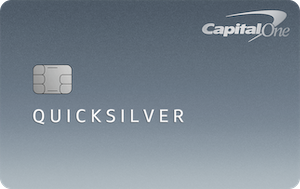
Capital One Quicksilver Secured

Deposit: $200 minimum | Annual fee: $0 | APR: ~29.99% variable | Cash back: 1.5% on everything

Capital One's secured option is the simplest card on this list. No rotating categories to track, no quarterly caps. Just 1.5% cash back on every purchase.

The graduation timeline is slightly faster than Discover's. Capital One starts reviewing your account at 6 months for an automatic upgrade. If approved, you get your deposit back and move to the unsecured Quicksilver, which is a genuinely solid everyday rewards card.

Reports to all three bureaus.

The catch: The APR is the highest on our list at 29.99%. And the flat 1.5% cash back, while simple, earns less than Discover's 2% categories (especially with the first-year match). If you spend a lot at gas stations or restaurants, Discover wins on pure value. But if you just want something straightforward, Capital One delivers.

OpenSky Secured Visa

Deposit: $200-$3,000 | Annual fee: $35 ($0 for OpenSky Plus) | APR: ~25.14% variable | Credit check: None required

OpenSky is one of the few true easy approval credit cards on the market, and we mean that literally.

No credit check. No bank account required. Recent bankruptcy? Doesn't matter. Collections on your report from last month? Doesn't matter. OpenSky will approve you as long as you can put down the deposit.

This makes it genuinely unique. Every other card on this list runs at least a soft pull. OpenSky runs nothing. Your approval is essentially guaranteed once you fund the deposit.

The deposit range goes up to $3,000, which means you can set a higher credit limit from day one. That helps keep your utilization ratio low without watching every single swipe.

Reports to all three bureaus.

The catch: Two things. First, the $35 annual fee (unless you go with OpenSky Plus at $0). On a $200 limit, that's 17.5% of your credit line eaten by fees on day one. Second, there's no automatic graduation path. You won't get upgraded to an unsecured card. After 12-18 months of rebuilding, you'll likely need to apply for a new unsecured card elsewhere and then close this one.

Bank of America Unlimited Cash Rewards Secured

Deposit: $200 minimum | Annual fee: $0 | APR: ~28.24% variable | Cash back: 1.5% on everything

Bank of America's secured card is functionally similar to Capital One's Quicksilver Secured: $0 annual fee, 1.5% flat cash back, $200 minimum deposit. Where it stands out is the Bank of America ecosystem.

If you have a Bank of America checking or savings account, managing your secured card deposit and payments becomes easier through their app. BofA also periodically reviews accounts for graduation to their unsecured Unlimited Cash Rewards card, though they don't publish a specific timeline the way Discover and Capital One do.

Reports to all three bureaus.

The catch: The graduation path is less transparent. Capital One says 6 months, Discover says 7 months. Bank of America says "periodically." If you want a clear timeline for getting your deposit back, this ambiguity can be frustrating. The card itself is solid, but the uncertainty around graduation puts it behind Discover and Capital One in our ranking.

Petal 2 (Unsecured)

Deposit: None | Annual fee: $0 | APR: ~18.24-32.24% variable | Cash back: 1% (increases to 1.5% after 12 on-time payments)

Petal 2 is the outlier on this list because it's unsecured. No deposit required. And it uses what Petal calls "cash flow underwriting," which means they connect to your bank account and analyze your income and spending patterns instead of relying solely on your FICO score.

This makes Petal 2 a strong option for two specific groups: people with thin credit files (you haven't been scored yet because you have fewer than six months of credit history) and people whose FICO doesn't reflect their actual financial behavior (you earn well and pay bills on time, but a medical collection from two years ago tanked your score).

The APR range is wide (18.24-32.24%), and where you land depends on what their underwriting model sees in your bank data. If your cash flow is healthy, you could land on the lower end, which is genuinely competitive.

Reports to all three bureaus. Credit limit increases over time with good behavior.

The catch: It's harder to get approved than a secured card. Petal's underwriting is more selective than "put down a deposit and you're in." If your bank account shows overdrafts, inconsistent income, or high recurring debts relative to income, you may not qualify. Also, the starting cash back rate of 1% is lower than every secured card on this list until you hit 12 on-time payments.

Who each card is best for

The right card depends on your specific situation, not just your score. A 550 FICO after a bankruptcy is a completely different animal than a 550 FICO from a thin file. Here's our honest recommendation for each scenario.

Your situationBest cardWhy
No credit history / thin filePetal 2 or OpenSky SecuredPetal 2 uses cash flow data, not credit history. OpenSky skips the credit check entirely.
Recent default / collectionsDiscover it SecuredReports to all 3 bureaus, best cash back rewards for rebuilding, auto-graduation at month 7.
Post-bankruptcyOpenSky Secured VisaOnly card on this list that requires no credit check. Accepts recent bankruptcy.
Rebuilding after missed paymentsCapital One Quicksilver SecuredFastest graduation timeline at 6 months. Get your deposit back and move to a real rewards card.
Want to stay in one bank ecosystemBank of America SecuredEasiest integration if you already bank with BofA. Solid 1.5% cash back.

One thing we want to emphasize: whichever card you choose, the rebuilding strategy is the same. Pay on time, keep utilization low, and don't apply for multiple cards at once. Hard inquiries from credit card applications stay on your report for two years and can knock 5-10 points off your FICO each time.

If you're dealing with debt on top of a low score, you might also want to look at debt consolidation loans or our guide on how to get out of debt before adding a new credit line.

How to use a credit card to rebuild your credit

Getting approved is step one. Using the card correctly is where the actual rebuilding happens. Your FICO score is built on five factors, and two of them account for 65% of your total score. Here's what to focus on.

The rebuilding playbook

Keep utilization below 30% (aim for under 10%)

Credit utilization is 30% of your FICO score. If your limit is $200, that means keeping your balance below $60 at statement close. Ideally below $20. The trick: pay down your balance before your statement closes, not just before the due date. The balance on your statement date is what gets reported to the bureaus.

Never miss a payment

Payment history is 35% of your FICO score, the single biggest factor. One missed payment (30+ days late) can drop your score 50-100 points and takes seven years to fall off your report under the FCRA. Set up autopay for at least the minimum due. Then pay the full balance manually each month. Autopay is your safety net, not your strategy.

Use the card for small recurring charges

Put one small subscription on the card ($10-15/month) and pay it off in full. This creates consistent activity without tempting you to overspend. Netflix, a streaming service, your phone bill. Something predictable. You want boring, consistent behavior on this account.

Don't apply for other credit during the first 6 months

Each application triggers a hard inquiry. Multiple inquiries in a short window signals risk to lenders. Give your secured card 6 months of clean history before you apply for anything else. Let the positive payment history stack up first.

Check your credit reports for errors

Under the FCRA, you can dispute errors on your credit report for free through each bureau. About 1 in 5 consumers have errors on at least one report. An incorrect collections account or a payment marked late when it wasn't can hold your score down for years. Pull your reports at AnnualCreditReport.com and go line by line. If you want to understand what a good credit score actually looks like and how the ranges break down, that guide covers it.

Realistic timeline: Most people starting from the 500-580 range see meaningful score improvements within 6-12 months if they follow this playbook consistently. By month 6-7, issuers like Discover and Capital One begin graduation reviews. By month 12-18, many rebuilders qualify for unsecured credit cards and even fair credit personal loans.

Patience is the hardest part. But the math is straightforward: 35% of your score is payment history, 30% is utilization. Nail those two and the score moves. We've seen it across hundreds of reader stories.

For a more granular understanding of when those score bumps actually show up, check how often your credit score updates.

Your rights under the CARD Act

The Credit CARD Act of 2009 was designed to protect consumers from the predatory practices that were rampant in the subprime credit card market. If you're applying for a credit card for bad credit, these protections matter to you more than most people.

Here's what the law guarantees:

  • First-year fee cap: Total fees cannot exceed 25% of your initial credit limit. If your secured card has a $200 limit, the issuer can't charge you more than $50 in fees during year one. This single rule killed off hundreds of predatory "fee harvester" cards that used to charge $150+ in upfront fees on a $300 limit.

  • Rate increase restrictions: The issuer cannot raise your APR on existing balances during the first 12 months. After that, they must give you 45 days written notice before any rate increase. You have the right to reject the increase and pay off your balance at the old rate.

  • 21-day grace period: Your bill must arrive at least 21 days before the due date. This gives you time to review charges, catch errors, and make your payment without being squeezed by a tight timeline.

  • Over-limit fees only if you opt in: Issuers cannot charge over-limit fees unless you explicitly agree to allow transactions that exceed your credit limit. Our recommendation: don't opt in. Let the transaction get declined instead.

  • Schumer Box disclosure: Every credit card offer must include a standardized table showing APR, annual fee, penalty APR, grace period, and all other fees in a consistent format. Always read it. It takes 60 seconds and tells you everything the marketing copy won't.

CARD Act impact

The CFPB found that the CARD Act saved consumers more than $16 billion in gotcha fees since its passage. For subprime cardholders, who were disproportionately targeted by fee-heavy products, the savings were especially significant.

Beyond the CARD Act, the Fair Credit Reporting Act (FCRA) also protects you. Negative marks (late payments, collections, charge-offs) stay on your credit report for 7 years. Bankruptcies stay for 10 years. But you have the right to dispute any information you believe is inaccurate, and the bureaus must investigate within 30 days.

These protections exist because the system was rigged against people with low credit scores for a long time. Use them.

Frequently Asked Questions

Can I get a credit card with a 500 credit score?

Yes. Secured credit cards like the Discover it Secured and Capital One Quicksilver Secured accept applicants with scores in the 500 range. OpenSky Secured Visa doesn't check your credit score at all, making it the most accessible option. You'll need a refundable deposit (usually $200), but approval odds are high. For unsecured options, Petal 2's cash flow underwriting may work if your bank account shows healthy income and spending patterns despite the low score.

How fast will my credit score improve with a secured card?

Most people see initial score movement within 3-6 months of consistent on-time payments and low utilization (below 30% of their limit). Meaningful gains, enough to qualify for better cards, typically take 6-12 months. Starting from the 500-580 range, reaching the "fair" credit band (580-669) within a year is realistic. Getting above 670 ("good" credit) from a very low starting point usually takes 12-18 months of disciplined use.

Do secured card deposits earn interest?

Generally, no. Most issuers hold your security deposit in a non-interest-bearing account. There are occasional exceptions (some credit unions offer secured cards with interest-bearing deposit accounts), but none of the five major cards on our list pay interest on your deposit. Think of the deposit as temporarily locked away, not as a savings vehicle.

What is the difference between a secured and unsecured credit card?

A secured card requires a refundable cash deposit that serves as your credit limit. You put down $200, you get a $200 limit. If you stop paying, the issuer keeps the deposit. An unsecured card requires no deposit, but approval depends on your creditworthiness. For people with bad credit, secured cards are easier to get approved for, while unsecured options like Petal 2 use alternative data (bank account activity) for approval.

Can I get a credit card after bankruptcy?

Yes. OpenSky Secured Visa explicitly does not run a credit check and accepts applicants with recent bankruptcies. Other secured cards may also approve you, though approval is less certain. The bankruptcy stays on your credit report for 7 years (Chapter 13) or 10 years (Chapter 7) under the FCRA, but that doesn't prevent you from opening new secured accounts. Getting a secured card after bankruptcy is actually one of the fastest ways to start rebuilding.

How long do negative marks stay on my credit report?

Under the Fair Credit Reporting Act, most negative information (late payments, collections, charge-offs) remains on your credit report for 7 years from the date of the original delinquency. Chapter 7 bankruptcies stay for 10 years, while Chapter 13 bankruptcies stay for 7 years. Hard inquiries from credit card applications stay for 2 years but only affect your score for about 12 months. You can dispute any information you believe is inaccurate for free through each bureau.

What APR should I expect on a credit card for bad credit?

Subprime credit cards typically charge between 25% and 36% APR. For context, the average APR across all credit cards is 24.62% (Philadelphia Fed, Q1 2025), and the average across all consumer accounts is 21.22% (Federal Reserve G.19). The cards on our list range from 18.24% (Petal 2's best rate) to 29.99% (Capital One Quicksilver Secured). Our strong recommendation: pay your balance in full every month and the APR becomes irrelevant. Treat it as a rebuilding tool, not a borrowing tool.

Financer Talks

Do you have a question about this topic? Ask the community.

Browse all
Min 10 characters

Be the first to ask a question about this topic.

Need help?